OpenAI Goes After the Legal Industry With Astra for Law
OpenAI Goes After the Legal Industry With Astra for Law
The legal AI race just changed again.
OpenAI has launched Astra for Law, a legal-specific version of its latest AI technology designed for lawyers, law firms and legal technology companies.
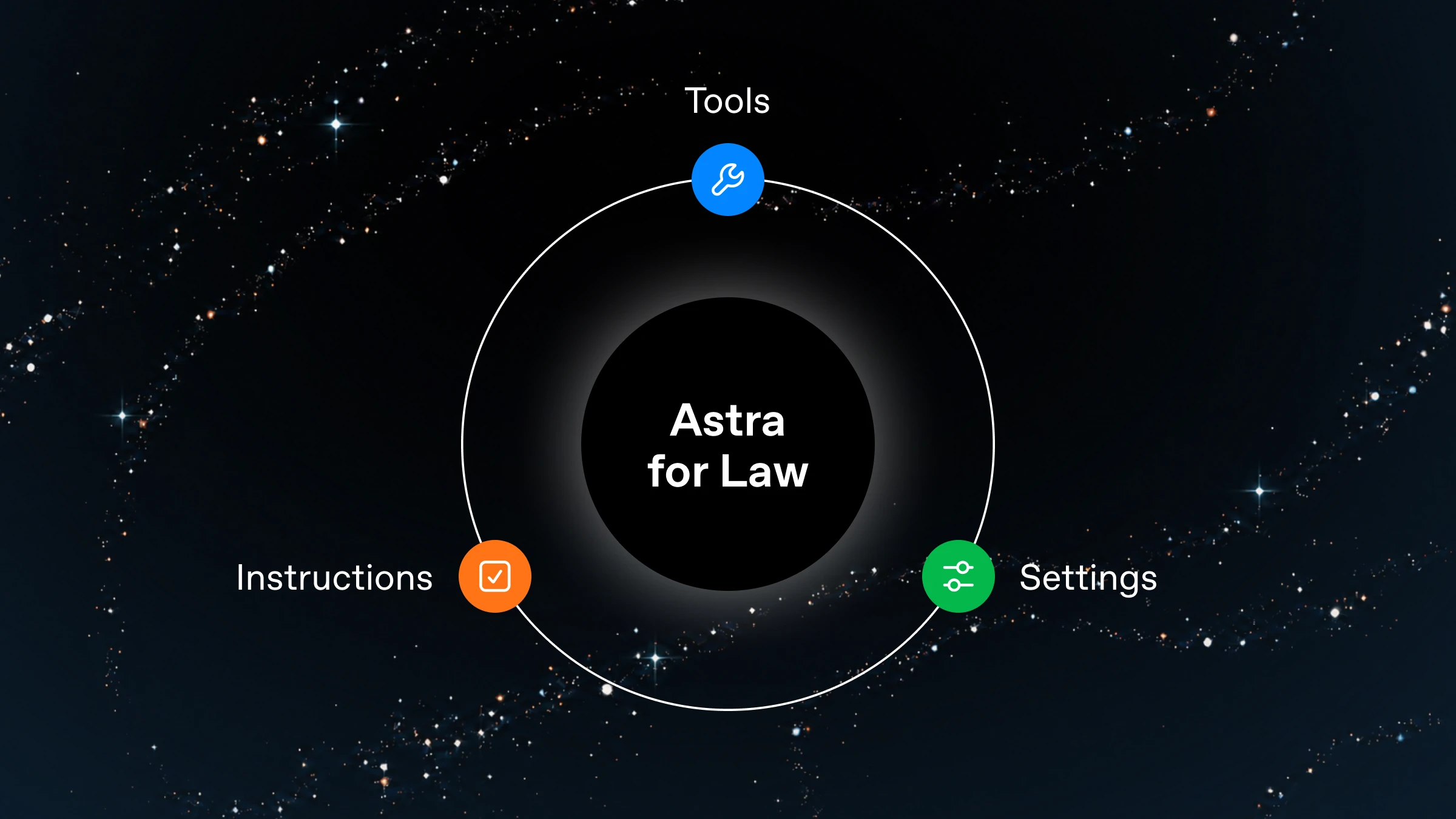
And this isn't simply ChatGPT with a legal prompt. Astra for Law combines OpenAI's frontier AI with specialised legal instructions, a dedicated Legal Search Index and integrations with some of the biggest platforms already operating across the legal industry.
Its legal search capability currently covers more than 230 million URLs across US case law, statutes, regulations, court rules and administrative decisions, with new sources being added daily.
Through a collaboration with Free Law Project, OpenAI says the system has access to more than 99.9% of published US precedential case law.
The early performance numbers are also significant.
In OpenAI's testing across 200 complex US legal research questions, Astra for Law achieved overall correctness on 54% of questions, compared with 38.7% for the underlying general-purpose model using standard web search.
That's a substantial improvement, but also an important reminder that AI-generated legal research still requires lawyer verification. It's Not Just About Research
Perhaps the bigger story is what OpenAI is building around the model. Astra for Law is launching with 26 partner-built plugins, connecting ChatGPT with legal technology platforms including Thomson Reuters, Harvey, Legora, iManage, Relativity, Clio and Intapp.
The ambition is increasingly clear.
AI isn't simply being positioned as somewhere a lawyer goes to ask a question.
It is becoming an operating layer across legal work, connecting research, drafting, documents, internal knowledge and firm workflows. Major US firms are already experimenting with that model, including Sullivan & Cromwell, Ropes & Gray, Cooley and Latham & Watkins.
What Does This Mean for Australian Lawyers?
There is an important limitation.
Astra for Law's dedicated legal search capability is currently focused on US legal materials, with initial access centred on selected US firms.
So this isn't yet a replacement for Australian legal research platforms. But Australian firms should pay attention to what it represents.
Until now, much of the legal AI conversation has centred around specialist platforms such as Harvey, Legora and CoCounsel.
Now one of the world's largest AI companies is building directly for the legal profession, while simultaneously allowing specialist legal technology companies to operate within its ecosystem.
LawUno Insight
This isn't simply another AI product for lawyers. It is another indication that law is becoming one of the major battlegrounds for enterprise AI.
The question for Australian firms is therefore shifting.
It is no longer simply:
“Should our lawyers use AI?”
Increasingly, it will be:
Which AI ecosystem will sit underneath our research, drafting, documents, knowledge and workflows?
And there is an even bigger question for the Australian legal technology market. If OpenAI eventually brings Australian case law, legislation and authoritative legal sources into the same infrastructure, what happens when ChatGPT itself becomes a legal platform?
That may be where the next phase of the legal AI race begins.