She Called Law ‘Soul-Sucking’ on TikTok. Days Later, She Lost Her Job.
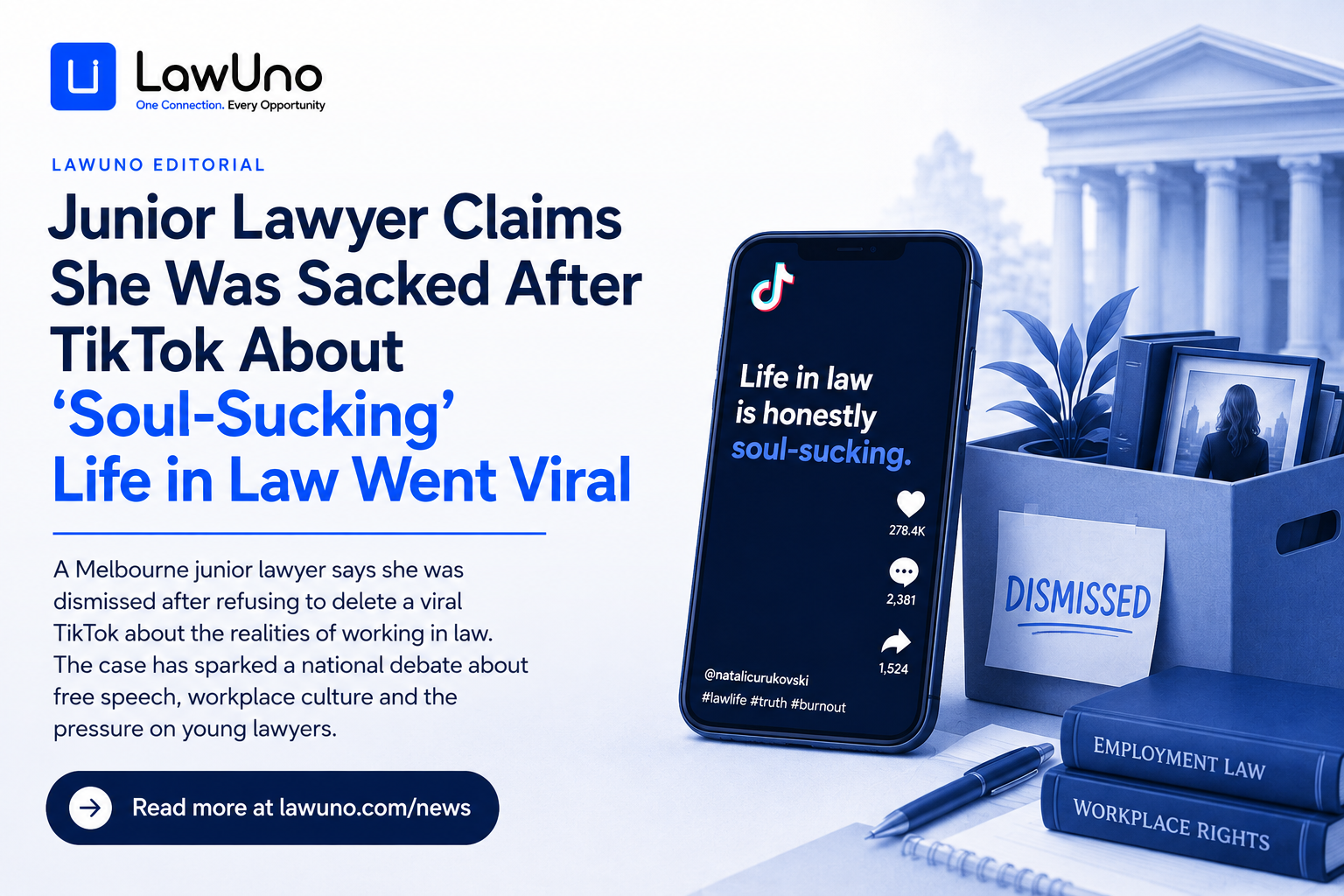
A Melbourne junior lawyer has ignited a debate across the Australian legal profession after claiming she was dismissed following a viral TikTok about the realities of working in law.
Natali Curukovski had only recently entered the profession when she posted a video describing law as “soul-sucking” and questioning the long hours, work-life balance and commercial pressures facing lawyers.
The video exploded online.
Days later, Curukovski says she was asked to remove it. She refused. She was subsequently dismissed.
Her former employer has defended its workplace culture and junior lawyer conditions, while declining to discuss the specifics of an individual employment matter.
But the story has quickly become bigger than one lawyer or one firm.
It raises a difficult question for a new generation entering the profession:
Where does a lawyer's personal voice end and their professional obligations begin?
Social media has fundamentally changed that boundary.
Young lawyers increasingly build personal brands on TikTok, LinkedIn and Instagram, openly discussing salaries, burnout, workplace culture and what life inside the profession is really like.
For firms, that creates a new reputational challenge. An employee doesn't necessarily need to name their employer for viral commentary about their working life to become associated with the organisation.
For lawyers, there are risks too. Australian employers can potentially take action over social media conduct where there is a sufficient connection to employment or damage to an employer's interests. But dismissal is not automatically justified simply because an employer dislikes what someone posts online.
LawUno Insight
There are two conversations here.
One is whether posting publicly about your employer and profession was a wise career decision only weeks into a new role. The other is whether the frustrations behind the video deserve to be heard.
Both can be true.
The next generation of lawyers is far more willing to publicly question the culture, hours and expectations previous generations often accepted quietly.
Law firms can dismiss that as a generational problem. Or they can ask why the message resonated with nearly 300,000 people in the first place.
That may be the more important question.