Survey Reveals High Burnout Rates Among Lawyers and Potential Role of AI
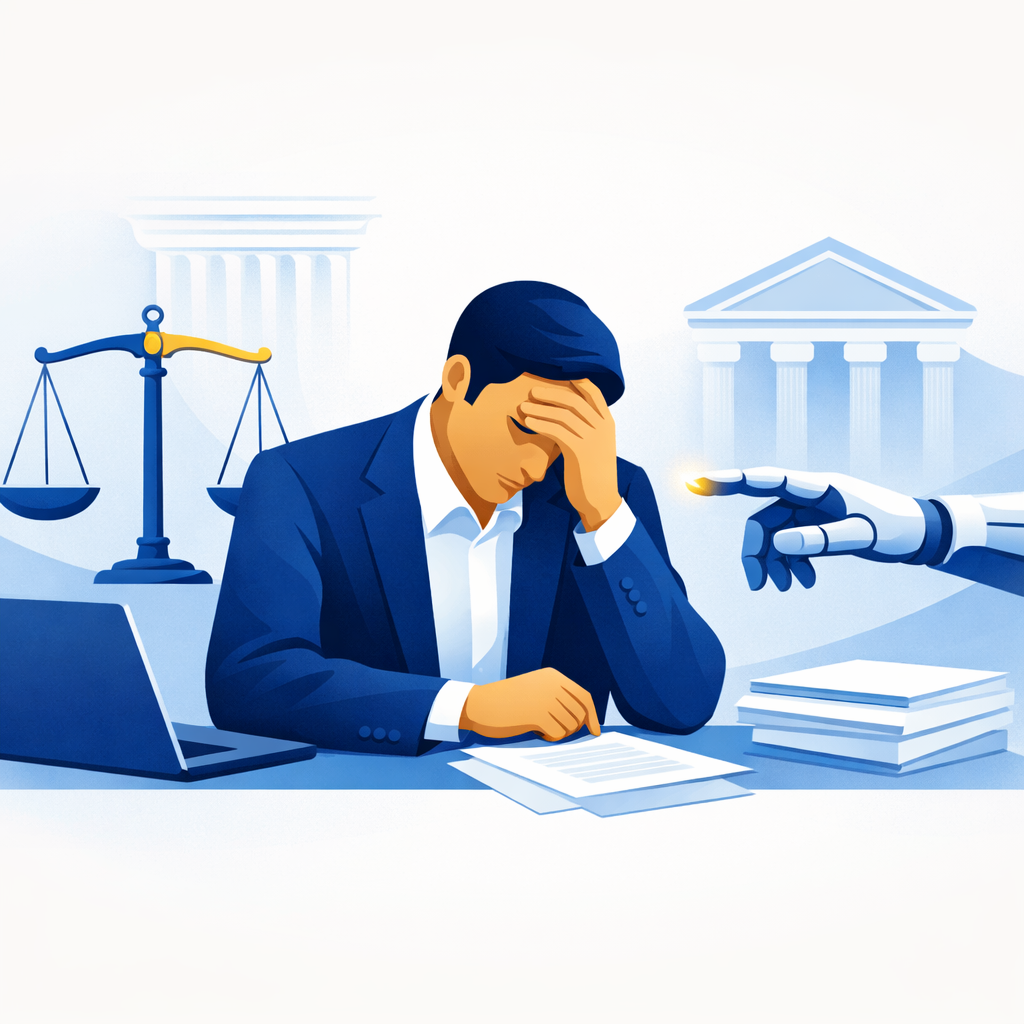
A recent survey conducted by the American Bar Association has revealed that nearly half of all lawyers, specifically 47.4%, screened positive for high levels of burnout, with 15.6% meeting the criteria for severe burnout.
The survey, which included responses from 37,000 lawyers across the United States in collaboration with Krill Strategies, highlighted that only 39% of respondents felt their employers were adequately supporting their well being. Furthermore, a mere 25% believed that the legal profession as a whole was doing enough to address these issues.
While the legal profession has a reputation for demanding working conditions, akin to those faced by emergency room doctors and police officers, many argue that this should not be accepted as the status quo. The pressing question remains: can artificial intelligence (AI) alleviate some of the burdens faced by legal professionals?
Proponents suggest that if AI can handle more routine and process driven tasks, it may free up time for lawyers, thereby reducing stress and improving overall job satisfaction. However, sceptics point out that simply completing tasks more quickly does not necessarily lead to a better work life balance, as the additional time may be filled with more work.
Patrick R. Krill, a member of the survey team and a professional at the University of Minnesota Medical School, noted that the increasing integration of AI into the legal profession may be contributing to anxiety among lawyers. This could stem from concerns about job security, uncertainty regarding AI outputs, or simply the stress associated with adapting to new technologies.
For AI to be beneficial, it must enable lawyers to engage in more meaningful work rather than merely shifting the burden of tasks. For instance, an in house lawyer might use AI to manage a large volume of contracts, saving time. However, the real value will depend on whether this time is redirected towards more interesting or strategic tasks, rather than simply leading to an influx of additional routine work.
Moreover, the impact of AI on workload and job satisfaction may vary significantly among individuals. While some may welcome the opportunity to tackle more complex and strategic work, others may prefer the familiarity of their current responsibilities.
In the context of law firms, the extent to which AI can contribute to a healthier work life balance may depend on the firm's culture and expectations. For example, in firms that operate on a billable hour model, the integration of AI might not lead to reduced hours, as partners may expect lawyers to take on additional tasks immediately.
Conversely, firms that adopt a more flexible approach, such as New Model firms, may find that AI can enhance their work culture, allowing lawyers to maintain set hours without the pressure of continuous billing.
Ultimately, while AI has the potential to assist in alleviating some of the pressures faced by lawyers, meaningful change will require a reevaluation of existing human systems and work patterns. AI alone cannot transform workplace culture, but it may serve as a catalyst for positive change in the legal profession.
For those in the UK experiencing burnout or related issues, the organisation LawCare may provide valuable support.
Legal Innovators UK will be held in London on 4th and 5th November, focusing on the intersection of legal AI and the business of law.